
Apostolic Round Table Urges Restructuring as Panacea for Nigeria’s Challenges


January, 24 2025

Nigeria’s path forward was the focus of discussion at the Apostolic Round Table (ART) 2025, where eminent Nigerians converged to recommend restructuring as the way forward. The event, themed “Stewards Of Nations Season 2: One Nigeria” featured Bishop Dr. Joe Ighalo as the keynote speaker. The event took place on Thursday, January 23, 2025, at Jesus Evangelical Assembly on Allen Avenue, Ikeja, Lagos
Dr. Bolaji Akinyemi, the convener of ART 2025, delivery his speech
The Apostolic Round Table is an annual gathering that brings together prominent individuals and groups to discuss critical national issues. This year’s edition aimed to nurture the seed of a united Nigeria, with restructuring being a central theme.
Dr. Bolaji Akinyemi, the convener of ART 2025, emphasized the need for Nigeria to return to true federalism, stating that “nothing but a return to true federalism by the indigenous ethnic groups can nurture our multi-ethnic nation to unity”. He also warned that the country’s unity is non-negotiable and that any decision to restructure must be taken now, as postponing it beyond 2025 may spell doom for the nation.
Dr. Bolaji Akinyemi emphasized that Nigeria’s main issue lies in its federal structure. He believes that simply electing new leaders, regardless of their character, won’t bring about change. Instead, Akinyemi advocates for restructuring the federation in line with the vision of Nigeria’s founding fathers, as outlined in the 1963 constitution.He also criticized the country’s political parties for lacking ideology and its elite for being greedy and unethical. Akinyemi stressed that these individuals will stop at nothing to gain and maintain power.
To move forward, Akinyemi called for a national conversation on achieving unity and operating as a single federal republic. He expressed gratitude to the founders and leaders of the MNR platform, which promotes non-violent advocacy for national unity.
Bishop Dr. Joe Ighalo, in his keynote address
Bishop Dr. Joseph Ighalo, in his keynote address, urged Nigerians to unite and work towards a shared objective. He emphasized that the country’s challenges can be overcome with the right mindset and leadership, stressing that Nigeria’s problems are not insurmountable. This call to action highlights the importance of collective effort and effective leadership in addressing the nation’s issues.
The event aims to achieve three main goals: Discussing Nigeria’s Future, Fostering Unity, and Advocating for Restructuring. It seeks to explore the country’s path forward, promote national integration, and emphasize the need for restructuring and unity in Nigeria.
The event also featured discussions from think tanks and advocacy groups, such as the Movement for National Reformation and The Rebirth Group. These groups presented their perspectives on restructuring and offered recommendations for moving Nigeria forward.
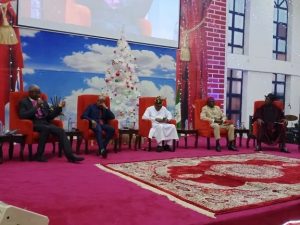
Group Panelist
Deacon Owolabi Oladejo, representing the Rebirth Group, emphasized the urgent need for Nigeria’s rebirth during the panel discussion. He asserted that the country’s current structure and formation are inherently flawed, rendering it impossible for Nigeria to achieve its full potential. Oladejo stressed that a fundamental transformation is necessary to rectify the country’s faulty foundation and pave the way for a brighter future.
Mr. Funsho Awe of the Civic Consciousness Global Initiative (CCGI) emphasized that meaningful change in Nigeria can only be achieved through active citizen participation, rather than passivity. He criticized the current system, which he believes favors members of the National Assembly, including the Senate and House of Representatives. Awe argued that relying solely on parliamentary solutions would be futile. Instead, he expressed optimism in the “Revolution Now” movement, led by human rights activist Omoyele Sowore, which advocates for radical change through collective action.¹ Awe’s stance is clear: revolution, not complacency, is the key to transforming Nigeria.
Pastor David Ololade presented a thought-provoking perspective, highlighting the significant impact of colonialism on Nigeria’s cultural heritage. He noted that prior to colonialism, Nigerians excelled in various sectors, including agriculturae, commerce, and politics.
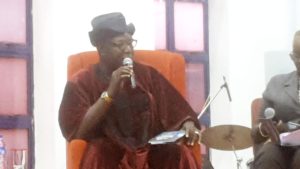
Pastor David Ololade (Isese)
However, the introduction of colonialism and foreign religions disrupted the nation’s natural progression. Ololade emphasized the crucial role of tradition, culture, and language in a nation’s success. “No nation can thrive without embracing its cultural roots,” he stressed. “When a nation loses its language, its extinction is inevitable.” He advocated for a revival of Nigeria’s rich cultural heritage, emphasizing the importance of preserving traditional practices, languages, and customs. Ololade’s mission involves promoting cultural awareness, particularly within religious communities, while cautioning against idolatry.
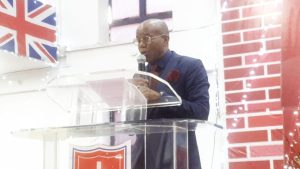
Bishop Joe Ighalo
Bishop Joseph Ighalo emphasized that certain regions in Nigeria feel marginalized and are advocating for restructuring. He highlighted the plight of minority groups, who face economic, political, and territorial inadequacies, leading to their quest for self-determination. According to Bishop Ighalo, these groups are seeking equality and justice within the Nigerian state, stressing that the current system does not favor them. He warned that if these issues are not addressed, there will be consequences. Bishop Ighalo’s call for restructuring aims to create a more equitable society where all regions can enjoy the benefits currently being enjoyed in other parts of the country. This sentiment echoes the need for a more inclusive and representative system, where the voices of marginalized communities are heard and valued.
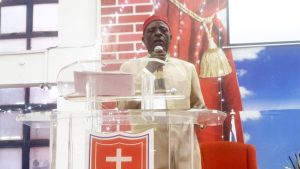
Prof Jonathan Akuns
Prof. Jonathan Akuns offers a candid perspective on Nigeria’s foundation, tracing it back to colonial rule. He notes that after a process of decolonization, Nigeria transitioned into a federation. However, Akuns expresses concerns about the neglect his region has faced, particularly regarding security. He highlights the dire situation in Jos, Plateau State, where farmers are unable to tend to their farms due to insecurity. Akuns emphasizes the urgent need for restructuring in Nigeria, advocating for a change in the current system. This sentiment echoes the broader call for reform in Nigeria, where many citizens feel marginalized and excluded from the country’s economic and political opportunities. The legacy of colonialism continues to shape Nigeria’s development, with many arguing that the country’s foundational structures must be revisited to ensure a more equitable future.
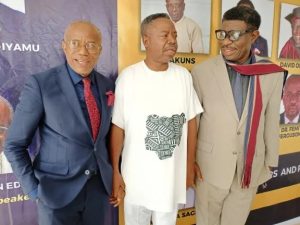
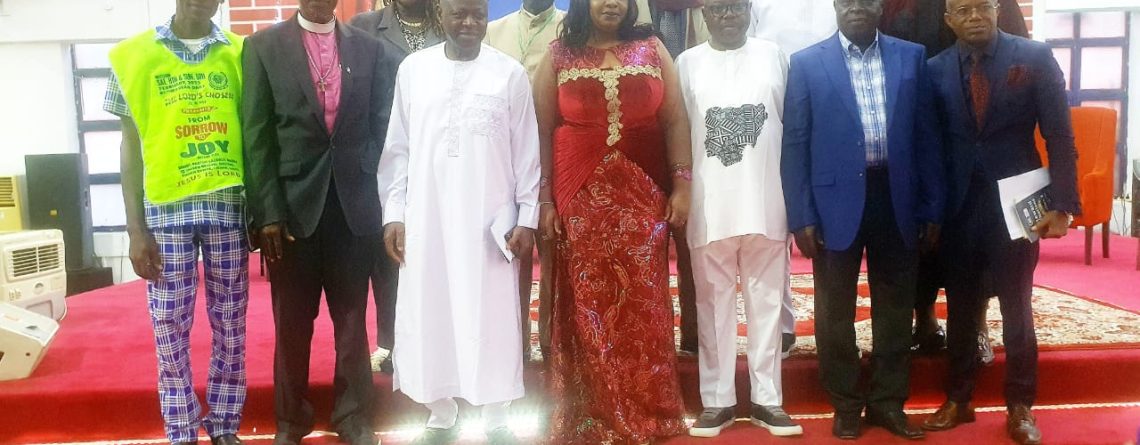
L:R Bishop Dr Joe Ighalo, Dr Bolaji Akinyemi and Dr Victor Okhai
The Apostolic Round Table 2025 served as a rallying cry for Nigerians to unite and strive for a prosperous future. This pivotal event underscored the urgent need for restructuring and unity, emphasizing that these elements are crucial to achieving a brighter future for Nigeria.
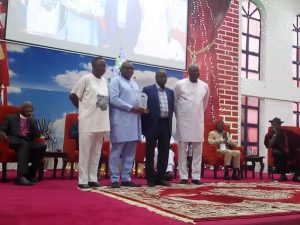
As Nigeria continues on its path forward, the recommendations emanating from this event are poised to play a vital role in shaping the country’s future trajectory. The event’s focus on restructuring as a means to return to true federalism and unity resonated deeply, with a clear call to action to depoliticize religion and foster a more inclusive society.
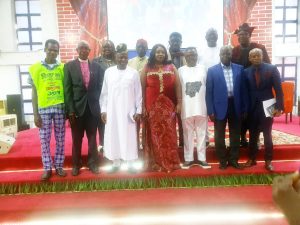
Furthermore, the event highlighted the significance of think tanks and advocacy groups in shaping Nigeria’s future. These organizations are expected to drive meaningful change and promote unity, ultimately contributing to the country’s growth and prosperity.
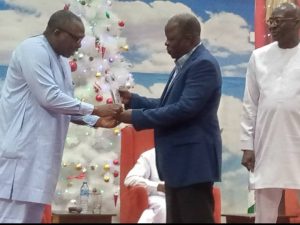
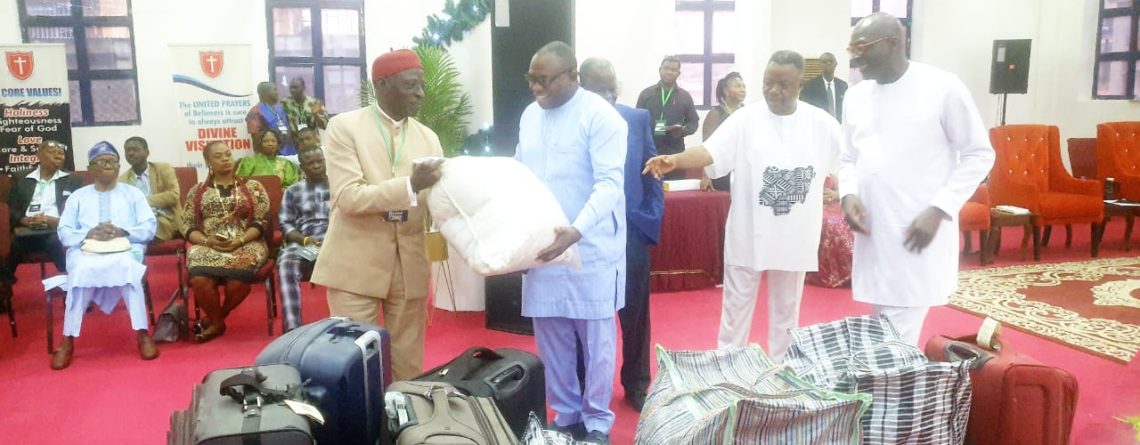
Dr. Femi Ferguson receiving award on behalf of Senator Francis Ade Fadahunsi
The event concluded on a high note with a special awards ceremony honoring distinguished Nigerians who have dedicated themselves to fighting for humanity. These remarkable individuals have made it their priority to drive positive change and improve the lives of others. Additionally, Senator Francis Adenigba Fadahunsi, representing Osun East, presented gifts to attendees, adding a thoughtful touch to the occasion.
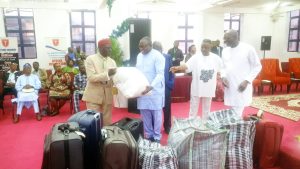
Dr Femi Ferguson presenting the gift Items on behalf of Senator Ade fadahunsi to Prof. Akuns
The Apostolic Round Table 2025 event drew an impressive array of notable attendees, key dignitaries included:
Dr. Alex Otti, the Executive Governor of Abia State, Bishop Dr. Joe Ighalo, the keynote speaker, Dr. Bolaji Akinyemi, the convener of ART 2025
Other notable guests were:
Senator Francis Adenigba Fadahunsi, representing Osun East, who was ably represented by Dr. Femi Ferguson
Dr. Victor Okhai, Chairman of Apostolic Roundtable 2025, Rev. David Esosa Eze-Iyamu, the Chief Host, Reverend Solomon Aderibigbe and several other distinguished guests.






Leave a Reply